17 February 2018

Horror at the North Pole, somewhere in frozen Greenland

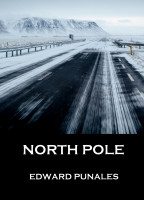
Horror | North Pole: A Horror Story | Edward Punales

This is the kind of story that makes you regret having liberally given 5 stars to other stories, and wish for the ability to give 6 stars. (And no, I have not lost my mind with the heading; I know that the 'real' North Pole is not in Greenland. But this heading is accurate. If you read the story, you will understand why and how).

An exceptional treatment solidly in the middle of the horror genre and What A Concept. Full marks for concept, language, editing, pace, build up, climax and post-climax, and ending. A classic piece of horror fiction.

A military doctor, recently bereaved and feeling a numbed apathy to life, agrees dutifully and promptly to a trip in advance of a snowstorm in Greenland, to respond to an SOS from a location where no research group, military base or civilian settlement has been known. All that is known to be around there are tales of UFOs spotted but not quite. The soldier and the doctor set off in their sturdy truck and reach a strange mansion, decayed and foreboding, where no mansion should be. Anything that I write further to this will be a spoiler, so all I will say is that the SOS-sender is also bereaved, but in a more sinister way. After disarming you charmingly, the story whips you back to horror, which grows slowly and relentlessly and does not spare you.


Awesome, Edward Punales, awesome! Worth every one of the 5 stars.

Get it here.

15 February 2018

Quick Sunday reads: more sci fi short stories

Science fiction shorts

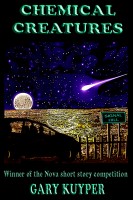
Chemical creatures | Gary Kuyper


We have here a depressive with blackout episodes and an alien with a humble task at which he/it hopes to excel and get promoted. There are chemicals involved and a weird kind of salvation for the depressive. The bit focussed on the depressive is very very chemical and the bit about the alien is a little funny and a bit of a surprise. The best part is the description of Cape Town.


It's neat, but not really my type. You can read it here.

Beyond: Space Opera | Milo James Fowler

This is a collection of shorts, which I'm taking one by one:

Captain Quasar and the Kolarii Kidnappers by Milo James Fowler has our intrepid Captain attempting to recover/rescue from the slow-moving Kolarii, a bunch of children whom they are alleged to have kidnapped. Except that it's not that simple. Captain Quasar stories are droll, but the villains always get their comeuppance, which is very satisfactory.

The Ungreat Escape by Siobhan Gallagher features a jewel thief and rocket motors, and eventually, an escape best described as ungreat. A bit funny in parts, and of course, crime doesn't pay...yet.

All Comms Down by Anne E Johnson is about one of the first extra-galactic spaceships, carrying a crew of colonists, and the trouble they encounter. Is there, ultimately, a cure of sorts for the mysterious illness that strikes the humans aboard? Plain and simple space opera.

Remembrance Day by Simon Kewin has a Mobius Strip in outer space, a Space Bar (I kid you not, he put this in with a straight face), a bar owner with little memory, a long-lost girlfriend, an old enemy and a startling surprise. I liked this one second best in today's lot. The plot is neat enough and the characters are well done.

The Lion's Den by Devin Miller has a very light touch. There is an ill-maintained spacecraft, zoo animals and a love-struck young man out to rescue the girl of his dreams. It's a fun and funny story, and my favourite in this collection.

Captain Clone by Deborah Walker has clones, wine, and a spaceship stuck on a planet, held by tentacles. Not to mention two utterly unloving 'mothers'. Creepily well done.

There are also short notes on the inspirations for the stories, which add to the experience.

You can buy this on Amazon.


A Golden Goose of a Girl

Science Fiction | Girl of Great Price | Milo James Fowler

Milo James Fowler writes sci fi, noir and detective, and this story is a mix of all three. Charlie Madison, the hard-boiled detective who is on the verge of bankruptcy, gets clients who want their kidnapped daughter back. Except that the city is run by the Russian mobster Ivan, whom nobody has ever seen, and Ivan is interested, too. Why is murder a real possibility in this mad search for a little girl? An old war with bioweapons results in strange and creepy outcomes. Is there a happy ending? Read this short story, and enjoy finding out.


Screen adaptation or book?

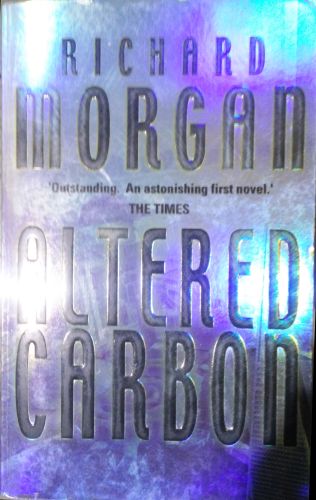
Science fiction | Altered Carbon | Richard Morgan

A few weeks ago, I was pleasantly surprised to find that a book I had liked was about to be released on screen, so I decided to refresh my memory before the screen adaptation was released.

What I remembered after a few years was that there was a murder mystery, very ingeniously written, and with all clues duly handed to the reader. If you’re really, really sharp, you can figure it out for yourself, but that’s if you get past the action scenes and have a few minutes to breathe and think! I also remembered that the name of the book was never explained. Why Altered Carbon, after all? What was the alteration?

I also read online that the screen version (on Netflix) had attracted complaints: of white-washing (why wasn’t an Asian playing Takeshi Kovacs) too many sex scenes and too much blood. I rolled my eyes at the first. In Chapter 1 itself, the Envoy feels upset at being put in a Caucasian body. And he’s half East European, so what’s with the Asian-Asian thing? He’s Asian-European. Eyeroll, and more eyeroll. So, what about the other complaints? Since I remembered the iconic scene in the AI hotel as the second thing in the story, along with the neatly packaged whodunit, I was keen on checking out if the original actually contained the complained-of sex and violence.

What do you know? It does. Every second chapter has mayhem, and every third or fourth is hidden behind too much steam. And yet, they are so integral to the plot that you wish Richard Morgan had written less of them, while scratching your head as to how that was supposed to be done short of censoring whole scenes and replacing them with asterisks, and thereby removing the immediacy of the motivations of the characters.

So, since the book is sufficiently famous, let me mutter and grouse about the screen adaptation. Now, here’s the thing, I haven’t yet read the other two books in the series, and I understand the screen adaptation (10 episodes/hours) leans heavily on stuff that is made clear in them, like about the Elder civilisation, which hardly rates 10 lines in book 1.

Mutter and grouse no 1: why didn’t Bancroft have a ponytail? Honestly, I expected him to look more like Malfoy senior, but by episode 3, it was not such a big deal.

Mutter and grouse no 2: You can’t mix Virginia Vidaura and Quellcrist Falconer! That is just not done! Waily waily, indeed, on this one. Quell is a distant person in the book, a bit like Mahatma Gandhi. Sure, people have actually met him, but it’s scarcely believable. In the screen adaptation, she’s right there, real as anything and twice as solid. This bit grated right along till the very end. Virginia, in fact, is the one who trained Kovacs. And then to mix her up with Sarah, who gets short shrift by getting only one scene, whereas she is a pivotal motivation in the book? Naaah!

Mutter and grouse no 3: What’s with the Envoys being terrorists?? They were the elite troops of the UN Protectorate, not the enemy. Envoys who moved to the private sector, like Vidaura and Kovacs, turned into master criminals. They weren’t wiped out. They were around. Our protagonist is disavowed, but the organisation is very much alive. Kovacs threatens the people in the Wei Clinic with them.

Mutter and grouse no 4: Why was the Hendrix downgraded to the Raven? Wail! Poe? That’s like ... Kung Fu Panda, not a deadly AI. But the scene in which Takeshi asks for a room? Very well done, and true to the book. That’s the point I’d decided would determine if I continued watching or not. Kudos for holding on to the viewer who wants faithfulness to the book.

Mutter and grouse no 5: What’s with the sister and associated maudlin stuff? Reileen Kawahara in the book was so much more believable. Sister?? Eyeroll all the way. Where’s the (utterly gruesome) water-carrier, eh?

The screen version has stuff that diverged so much. Backstory for Kristin Ortega. A different bodyguard. A son for Bancroft instead of Kawahara. Deus ex machina for Lizzie Elliot. An evil CTAC colonel. Ya, well, it’s all good. Otherwise, I could just read the book, right?

But here’s a really cool thing spotted in Episode 1 by my resident youth: check out what’s written on the side of the Police cruiser. Hee hee hee. I now believe totally that the series producers went truly overboard in trying to be as inclusive as possible, to counter the accusations of white-washing.

And you know what? The lead male actor is totally cute, as is the lead female actor. The Bancrofts are believable. Dimi the Twin is as evil as expected. The sets and special effects and CGI are super (I guess even better in 4K, except that I have no such screen). I only keep tripping over Reileen Kawahara and her katana. I look back on the ten episodes of series 1, and realise that the sex scenes, like in the book, leave less impact on my memory than the screen time they get. The mayhem scenes are gruesome, as in the book, or maybe more so. The burning forest is totally crazy (yes, I did notice that they ran all the ‘rebel’ scenes in brown and green, unlike the more popular cyan and orange colour schemes in most contemporary sci fi/action movies).

Is the screen version faithful to the book? Not as much as LOTR, a lot more than I Robot. Is it the same story, with the same characters? About as much as the new version Star Trek movies of the alternate timeline James T Kirk and Spock are the same as the original series/movies. So yes, it’s only nominally the same story. The book is denser, but the series is worth watching. Go for them both.

But...

Sister??
27 November 2017

Zombies at their best ... er ... worst

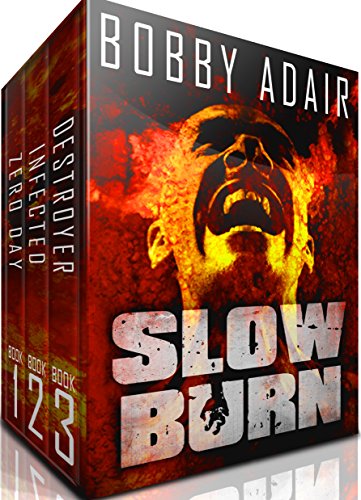
Horror (zombies) | Slow Burn boxed set | Bobby Adair

One would think that the zombie apocalypse has been done to death. But wait! Bobby Adair has written something that will have you flipping the pages as fast as you can read. Thank goodness I picked up the boxed set. Who could have waited to read the next and the next. I'd write a longer review, except that I need to go pick up the rest of the series. I understand there are already 8 books.

If you like thoughtful writing, fast action sequences, humour, zombies (duh), a likeable if somewhat crazy hero and other characters (his buddy has given him a superhero name: Null Spot, for good reason), frantic hopelessness mixed with diehard optimism, and strong characterisation, then this series is for you. Excellently edited, too, besides being very well written. The best part is that it actually gets better going from book 1 to book 3, not just in terms of zombie concepts, but also difficulty levels for the survivors, and in terms of moral questions. So you can be assured of lots of reading pleasure, and a side order of wondering how precariously modern civilisation is perched.

My small quibbles: The story is located in the USA, so you have more guns and shooting than you can roll your eyes at, a view that China is all third-world and a decidedly lukewarm attitude towards vegetarians (given all the cannibalism that a zombie book implies).

The book begins with a young man being bitten by an infected zombie on Zero Day of the zombie infection reaching the USA. Hauled up by the police for murder, he realises to his horror (and ours), that the crime wave is not due to bad drugs, but people going crazy. The hospital is not much help, because the Army has been called in to enforce quarantine. You have some good people, and as the story goes on, you have some less good people, and then some horrible ones.

If zombies could happen, it could happen this way. You will hold your breath as the Zed and his new friends tiptoe through the minefields of horror unleashed by a speedy breakdown of social order as most people succumb to the infection and civilisation starts going down the drain.

Now, let me go check out books 4 onwards, and see what new terrors the zombies can get up to.

Short, crisp horror

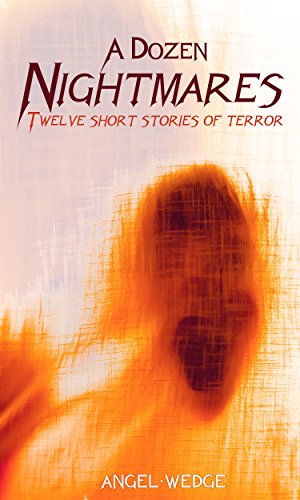
Horror | A Dozen Nightmares | Angel Wedge

Angel Wedge creates atmosphere and terror in the fewest words and the crispest sentences.

From everyday horrors like murderers to fantasy and sf horror to Lovecraftian stories that scare you by what they don't tell you, you can find every type in this short story collection. It starts with a bang, tears through different settings, urban and rural, reworks old concepts and startles with new ones, and ends with as big a bang.

If you like Lovecraft, Wedge is better, more modern. If you like Stephen King, Wedge is less wordy yet spares nothing. If you like Ray Bradbury horror stories, Wedge is crisper and comes to the point with speed and despatch.

Some of these tales are going to haunt me long years from now with their gentle telling of creepiest evils, heartless loves and fringe organisations.

Read and enjoy! Worth every penny.