Science Fiction |
Neal Asher |
Gridlinked
Like I mentioned in the last post, this book had me helplessly glued to it, and this is when it was a re-read, and also I'd had no intentions of re-reading the whole thing when I innocently picked it off the shelf to read a few pages. And this is Neal Asher's first novel. Whuff.
Gridlinked is the story of the fabulous Ian Cormac, described at one point in the book as 'the invention of fabulists', an agent for Earth Security in a universe where people travel from planet to planet via runcibles (Asher's name for the instant-elsewhere device variously called a gate, portal, etc in other fiction of the ilk). People live lives of luxury, mostly, and the tech is way up in the realms of magic. The only thing you cannot carry through a runcible is a proscribed weapon. And yet, there are those who want to leave the Polity, and drag their planet away from it. Separatists, particularly nasty multiple murderers get Cormac's goat, and he's awfully good at getting them to justice.
Early in the story, Cormac blows his cover by being too cyborg-like as a result of 30 years of being fully gridlinked with the AIs that run the cities, the runcibles, and Earth Security. Horace Blegg, the near-mythical head of ES, a 400 year old survivor of Hiroshima, suggests that he should get off the grid and take on a new assignment, to find out what caused one of the runcibles to fail, converting an incoming human into a 30 megaton bomb.
In this book, you meet the villainous separatist, Arian Pelter, who is as vicious a psychopath as you will ever meet in fiction; his sidekick, John Stanton, a boosted mercenary who prides himself on leaving separatist cells before they go fully bad, and misses the signs this time; Mr Crane, the broken Golem run by Pelter, and other assorted human villains. You also meet the dracomen, who may be alive, or not, probably created by Dragon, a series of four kilometer-diameter spheres with a touchy personality and an inexhaustible supply of lies and indirection. On Cormac's side, there are a team of four Sparkind, two of which are Golems, another Golem, a runcible expert, and assorted AIs and soldiers. Not to forget, the not-paranoid-enough smuggler captain, catadapt women and ophiadapt men. The augmentations that people do are satisfyingly futuristic, the different planets reminiscent of science fiction book covers down the ages. The spacecraft are marvels, the cars fly on anti-gravity, weird killer bugs and robotic spiders populate the shade under strange trees, and the weaponry is enough to start a movie series in itself.
All this and evocative writing too. Neal Asher actually makes you like the James Bond-ish Ian Cormac, and some of the lines are real gems. Sample:
He stretched himself out and was wondering if he would get any sleep, when sleep crept up and got him instead.
A whodunit with plenty of twists and turns, and a surprise ending.
And now, I wonder if a writer has to be ruthless with the characters, not just in setting up challenges for them, but even unto knocking them off when least expected, to get that extra 'grittiness' into fiction. You cannot be empathetic with your characters and create dyed-in-the-wool villains unless you are either psychopathic or have a ruthless grip on your imagination. At one extreme is I-will-gross-you-out-if-I-can't-horrify-you Stephen King and George RR Martin, who is inventively torturous with his characters. Certainly, these writers understand their characters, but they don't care for them, or they would not kill them so gruesomely. The taste has bitter notes all along, and sometimes strongly in the aftertaste, too. Even the chocolate in these is bitter choc. On the other end, you have Anne McCaffery, Catrina Taylor and Gord McLeod, who care deeply for their characters, and shy away from the real gore. There are tragedies and triumphs, but the overall taste is sweet. The villains are misguided and can be brought around, the aliens are understandable, and all problems can be solved if we all pull together. I know which world I'd prefer to live in, all right! And who doesn't like cake?
Yet, once in a while, your reading will go for the stronger and less expected tastes. Gridlinked is salty, pungent, with a hint of sour and an early overlay of bitter. More like eating a large burger with chilli than a bowl of chips. Satisfying.
OK, now I need to get back to Children of the Sky. Only, I'm taking a short story diversion through Aberrations, edited by Jeremy Shipp. I'm three short stories in already, which is blazing fast for a book I only downloaded today. (Oh, did I mention it's free on Amazon today?) Read it yourself, so that you can take issue with me in a few days when I comment on it. Please. :)
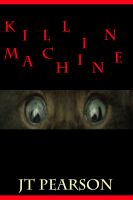 At first, it didn't read like a sci fi story at all. At all. We have this weird loner guy. And then we have a kitten. Then he has kittens, in the British sense of the term. And slowly the sci fi part emerges. And the horror part. Except that it's at least as funny as it's horrible.
