Showing posts with label Terry Pratchett. Show all posts

19 June 2019

Indian science fiction that is not rehashed mythology (part 1 of 5)

Science Fiction | The Gollancz Book of South Asian Science Fiction | Tarun K Saint (editor)

⭐⭐⭐⭐ (I really liked it)

I have mixed feelings about this collection. To start with, I had high expectations. After all, stories set in the Subcontinent would be set in my daily milieu. Plus, they were science fiction. This is a genre that does not have much of a dedicated market in India, especially in English. So people like me have to cast a world-wide net, and rely on translations or English language publications. That is a separate essay, which I am not writing here.

The collection itself has different levels of writing. Some of them are such gems, I want to buy copies of the book and gift them around. Hence, overall, 4 stars (I really liked it). There are poems, also, and poetry is in the eye of the beholder, but again, some left me cold and some were my beamish boys.

But some of it is eye-rollingly disappointing. Especially the old historical stories in translation. Some of it is not science fiction. Sorry, Tarun K Saint and Manjula Padmanabhan, you included some stories because you liked them and because the writers perhaps write science fiction, but these were not the stories that are science fiction. I was forcibly reminded of a hoity-toity reviewer of a Terry Pratchett book (which the publisher’s found fit for weird reasons to add as a blurb) which described him as ‘one of the premier satirists’ of the day. I remember reading that, curling my lip and muttering, No, no, and again no, buddy, you’ve missed the whole point. Certainly, some science fiction makes satirical points. But if that’s the primary aim, it dates fast and horribly, and the gruesome remains are turned over by foresters while holding their noses and poking about in the ruins. And there are usually not too many arguments about which animal’s scat and/or remains are being turned over, though some may recall seeing the beast in the wild with fond nostalgia. And yet, I feel reluctant to dismiss some of the pieces just because they are not science fiction, because some of these pieces are such extremely good satire. I guess the editors felt the same tug, so I’ll provisionally forgive them.

So, to the story-by-story. (Only because there is a limit on the number of tags I can put on a post, shall I split this into two or more posts).

Foreword: Spice-ship to Infinity by Manjula Padmanabhan

In which one of the most famous names in this collection brings us fascinating historical tidbits,  ponders inclusivity, voice and cultural references, and reaches unhappy conclusions on the perils of compromise and marketing pressures.

Introduction: SF Matters: South Asian Futures to Come by Tarun K Saint

This is almost a literary thesis, with no less than 91 footnotes, and brings us a doubtless difficult-to-write yet concise summary of South Asian sci fi, set in context both in time and space (the whole world).

Planet of Terror by Adrish Bardhan (translation)

One of the mistakes that anthology planners make is to start with a historical piece, the oldest one they can get hold of. This is a very light piece, it reminds me of sci fi that I used to read in Children’s World when I was a kid (I’m not knocking the magazine; it’s still the best kids’ magazine in the world; their monthly round-up of current affairs is the utmost neutral and accurate news summary on the planet, that alone is worth the subscription price). But this kind of fantastic story is now a done-to-death trope, and has no freshness any more.

Inspector Matadeen on the Moon by Harishankar Parsai (translation)

This is one of the prime examples of satire that has dated badly. In 1985, the angst and black humour of Jane Bhi Do Yaaro (the movie) was still fresh and the flavour of the month. This Inspector Matadeen story is a walk down that dystopian lane, harsh, cruel almost, satirical and over the top.

Stealing the Sea by Asif Aslam Farrukhi

This is a mood piece, a slice-of-life look at instant crowds in urban India and the stereotypical people who populate them. Withal, it’s slightly cli-fi (climate change fiction) which is the token sci fi theme making an appearance, a take on present day urban systems, and has a sad ending. 

By this point, I was seriously wondering what I’d got myself into.

Chernobyl by Somendra Singh Kharola

A long poem or a short opinion with its starting point as Chernobyl, a trek across cultures, and an end that is a question mark. I’m not sure I like it, or that I will remember it years from now, though some lines have great power. YMMV.

The Sea Sings at Night by Mimi Mondal

Thank goodness for this story, otherwise, I would have shut the book and missed some of the wonders to come. This is about a narrator who loves one of the sea folk (that hunt for the sea fauna that “Mumbai is teeming with”). A compassionate look at holding on and letting go, at assimilation and maintaining one’s culture in the face of immense social pressure, at love and the residue of loss, at being an alien in the Big City.


And at this point, I press Pause, and start a fresh post for the rest of the stories in this collection.

...End of Part 1...

11 September 2018

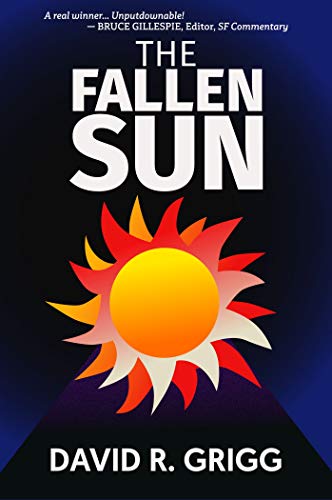
A fallen sun, a whodunit and mindbending world-building

What more could you want? I’ve read several short stories by David Grigg and his short novel A Twist of Fate. I thought he had set high standards.

The Fallen Sun has just raised those standards further. It’s going to be difficult to avoid spoilers, because I’m so keen to share the wow moments in this book’s plot, but I shall control myself.

Three young people come of age (we’d call them older teens, but in the world of Sunfall, they are about ‘7 or 8 millends old’) and are faced with having their comfortable if unexciting worlds turned upside down, in a civilisation that is thousands of years old and has totally fossilised its working and culture. Candens and Campana of the Clan of Bellringers are brought up very differently. Only boys like Candens get taught the work of the high-class Clans, and girls like Campana have to content themselves with make-work like embroidery. Because, hey, they will get married and leak the Clan secrets. (Not that Candens, as a second son, has much joy of it either, bitterly watching his elder twin become an addict and wastrel.)

Campana’s friend and Candens' pledge, Adura, will have none of it. She is not keen to be traded as a pawn in clan politics, and joins a secret group. Which has an even more secret agenda.

Things go from bad to worse for our trio, as they get accused of murderous intent, get enmeshed in kidnapping, and get thoroughly framed by the real villains.

This is not a fantasy story, as you’d think at first, fallen sun and so on, but a well plotted sci fi with a fast pace, mindbending world-building, a carefully realised culture, wicked but human villains, a plot with plenty of twists, and whatever else you could want in a sci fi adventure of the very far future. All the while, David Grigg slowly pulls the world itself into sharper and sharper focus. Like any good sci fi, the world itself is a character. (Okay, okay, I promised no spoilers). There are plenty of wow moments as you realise what is really going on. The familiar becomes strange, and the strange becomes familiar as the book goes on. The characters grow upon you, and their flaws become endearing. By the time they are fully tangled in the web of deceit, you’re rooting for them all the way, and turning pages frantically to find out: what next??

The motives and methods of the villains are difficult to imagine until they slowly become revealed and perfectly logical after all. Like any good mystery, you go ‘of course!’ once you know the answer, and yet, like any good mystery, you can guess and guess and mostly guess all wrong.

This is sci fi of very high quality. You won’t be disappointed.

Read The Fallen Sun if you like... Terry Pratchett, especially if you liked Strata better than the Discworld books; M John Harrison’s The Pastel City; Jack Vance’s Dying Earth books, but you didn’t like that much callousness; historical mysteries and alternative history sci fi of the far past; sci fi that borders on fantasy; epic fantasy which makes sense (no magic); JRR Tolkein, but you would have preferred a faster read with real humans and less Destiny; YA; or sci fi with horses. It’s difficult to say more without spoilers, but this is hard sci fi though it initially reads closer to fantasy.

Disclaimer: I was a beta reader for the book (too greedy to wait for a David Grigg book to be officially released). Let me tell you, the draft version was compelling, but the final version had me spellbound--it blew my socks off, and I grudged my eating and sleeping time.

03 February 2017

Time travel for a better world

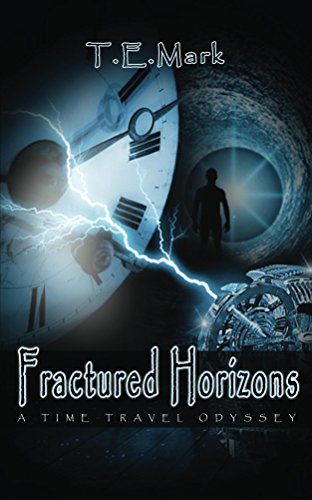
Fractured Horizons | T.E. Mark

I first came across T.E. Mark’s writing on his blog (temarkauthor.wordpress.com) where he writes these cheerful suggestions for SF writers struggling with sounding sufficiently high-tech. He not only brings the real science to you in an easily digestible format, but then proceeds to take off on the wildest trips through space and time and the multiverse, peppering the reader with crazy tech and plausible technology terms, until you finish the piece either with a big grin on your face or laughing helplessly.A time travel book for young adults

So I was more than delighted when he kindly agreed to give me a copy of Fractured Horizons for review. And I was certainly not let down in the least.

Fractured Horizons is a light read for young adults. The nearest book I can think of which is similar in theme is possibly Johnny and the Bomb by Terry Pratchett. As an older adult, I could wish FH was as long as JATB but TE Mark packs in quite a punch in a much shorter book.

Robert Davie, a teen in England, meets a new girl in school on page one. She’s mysterious, and knows more about him than he thinks possible, and leaves with a cryptic suggestion that he not freak out too much at the evening coming up; he’s not crazy. Robert, a studious type not given to thinking of himself as that attractive to girls, goes home. You know what they say about home? It’s where the wifi connects automatically. Robert finds out that the wifi not only doesn’t connect automatically, it doesn’t seem to be there. His mom is not his mom. The kitchen is not the kitchen. The world is not in 2016. He remembers Helena’s warning, and hangs onto sanity.

The next day is worse. He’s now in Alexandria, studying with Euclid, and he has a different name (and understands a different language)! Fortunately, Helena is around to explain/befuddle him more.

Robert finds he’s in ‘training’, but for what? He goes from past to future and back, depending on ‘what he learns’ during the day. Helena accompanies him throughout, nudging him towards understanding, managing the transitions and exchanging witty dialogue. The speed of the story and the light touch with the banter between the two made me spend the whole time reading FH with a smile on my face, sometimes expanding to a grin. The smile remained after the last scene flashed on the page and the final ellipsis came up.

The story is ostensibly about the adventures of Robert, but is actually more subtle. You end up wondering about which technological advances the present state of society can withstand, and which would likely overwhelm our coping power. Would you change it if you had the power? The book looks at nuclear power. A thoughtful teen would also go beyond and start wondering about climate change, about the Internet, and other technology impacts we take as ‘given’.

Do I recommend it? Well, if you want to smile your way through a neat story that allows you to think (or not, as you please), go right ahead and pick it up.

16 August 2014

Legal Thrillers for Kids

Legal Thriller | Theodore Boone: The Abduction | John Grisham

Into every hotshot best selling writer's life, some kids or grandkids will appear. Suddenly, the writer will realise that there's nothing really good out there for these super-awesome wonders of the universe. Thus did Terry Pratchett and John Grisham turn their keyboards towards the eager eyes of the tweens of the world.

The Abduction is the second Theodore Boone book. Theo is an eighth class student, and a lawyer at heart. The son of two famous lawyers of a small town in the USA, he is in and out of the courtroom, and possibly knows more about the law than many smart adults. Having liked the first book, we eagerly reach for this, the second.

And we are not disappointed. Grisham made his name as a pacy writer of complex legal twists and turns. He maintains much of that in the new child-friendly format, and the constraints of handling a story for the adults of tomorrow are handled deftly. These are not detective stories, despite the claim of one of the publisher's blurbs that link it to Nancy Drew (come to that, Nancy Drew was more about makeup than detection, meh); no, they bring you to the law.

Theo's good friend April Finnemore, has disappeared from her house in the night. Theo knows her mother is lying about the sequence of events, and tells his parents so. In the meantime, while police hunt all over the town, and the local TV channel keeps up a high-pitched repetition of meagre facts, April's father has vanished on a band-tour, and a convict cousin-cum-penpal of hers has been found in the vicinity, having busted out of jail. While the police try to convince the convict to confess and release the girl instead of angling for 'deals', Theo's ex-lawyer uncle gets tips from the local underworld, and the two of them pick up on clues to track April down.

There are side stories about dive-bombing parrots, and other everyday trivia. Still, you end up carrying away lessons about your rights, city ordinances, abuse of power and position, and other righteous stuff in a very slickly packaged story for kids of all ages.

Does that mean I will tell you about Theodore Boone and Theodore Boone: The Accused​? Heh heh. Hang around. I read those some months ago, and may get around to telling you about them some day. Or you can just go read them for yourself.

13 April 2013

Catching up with my reading

I've still got to tell you about Saving Faith by David Baldacci and Dark Visions (an anthology), yet I've read whole scads of books in the meantime. So I'll just list them here quickly, and you can expect to read about these in due course.

Finders Keepers by Belinda Bauer
Exposed by Alex Kava
Illegal Action by Stella Rimington
The Technician by Neal Asher
If I Should Die by Allison Brennan
Adrenaline by Jeff Abbott
Heroes of Olympus - The Demigod Diaries by Rick Riordan et fil
Deliver Us From Evil by David Baldacci
Dreamland by Jim DeFelice and Dale Brown
iBoy by Kevin Brooks
If I Should Die by Judith Kelman (no, I'm not repeating myself, same name, different authors!)
Variant by Robinson Wells
Plugged by Eoin Colfer
Battle Born by Dale Brown
Think of a Number by John Verdon
Case of Lies by Perri O'Shaughnessy
Stolen Magic by MJ Putney
Dodger by Terry Pratchett
Fragment by Warren Fahy
The Donor by Frank M Robinson


02 August 2012

Time travel with Duke Vimes

Fantasy | Terry Pratchett | Night Watch

What I forgot to mention in the last post was that Jingo featured one of the most immediately recognisable gadgets in all the Discworld books--the Disorganiser, which desperately and futilely attempts to remind Insert Name Here of his appointments throughout the book. In a twist that only the Discworld could come up with, Vimes tells the device in exasperation that it's no use reminding him of appointments he already knows about. How about telling him of appointments he doesn't know about. And that's what happens. Except that, at one point, Vimes in this world makes a decision he doesn't make in the parallel world (if this kind of stuff makes your head hurt, you should avoid science fiction and fantasy entirely), and picks up the wrong Disorganiser, with the result that as the two time paths diverge, he gets to know how narrowly he avoided disaster all around. Bingelly-bingelly-beep!

Now, here's the thing, Night Watch, too, has time travel. This time of the physical pick-up-the-person-and-dump-him-in-the-past type. Vimes, by now Duke, still hasn't learned to delegate chasing villains to his underlings. And the High Energy Magic building's roof is not the place to tempt fate, anyway. So Vimes and the villain end up back in Vimes' past, where he has to protect everyone he loves from the machinations of the 'who, me?' baby-faced and black-hearted villain.

In Night Watch, we meet the monks who manage time and have these large rotating cylinders that warp time. (Somehow, ever since Larry Niven's short story Rotating Cylinders and the Possibility of Global Causality Violation {in turn, swiping the title from a physics paper which describes real-Universe physics, mind-boggling as it may be}, I've had the impression that the large cylinders should be planet-sized or larger LARGE, but on the Discworld, faux-Tibetan cylinders manage well enough.) I suspect that Pratchett realised these monks would mess up any other book of the Discworld, so we don't quite meet them again.

Instead, we also meet, and this is a delight, Vetinari as a student assassin. And the early Sam Vimes, the early Fred Colon, and Nobby Nobbs as an urchin. We also meet the surprise of the citizens and watchmen at the idea of trolls or dwarves in the Watch, which is Pratchett's way of pointing out how the world changes in just half a lifetime. Things which were normal then are unacceptable today, and vice versa. Hey, just look around.

Pratchett has invented many villains, most of whom are plain bigots or ignoramuses with power, but this book has his first frisson-up-the-spine pure psychopath, the type James Patterson or Jeffery Deaver would scare us with, or Stephen King would use to mess with our heads. And, yet, you don't quite think he's the very worst villain in this book.

This is one of Pratchett's best Discworld books. Thud!, which came later, is not as good. But I'm not going to get to Thud! again for a nice long time. You can, instead, consider how singing the national anthem proves that you are a rebel in need of putting down. Go on, read it and realise how many assumptions you live with.

Let me close here, and move on to David Baldacci's Hell's Corner.

[Oh, in closing, the book cover doesn't have the hourglass or weird ring on it. That's just me trying to be artistic, rather unsuccessfully.]

29 July 2012

The last refuge of the scoundrel

Fantasy | Terry Pratchett | Jingo


Terry Pratchett is one of my favourite authors. I prefer his science fiction to his fantasy, but the Discworld is what he's best known for. As they said on one of his books' covers, there are 8 million books by Terry Pratchett in print. You don't have to read them all; just one of each.

I suspect Pratchett doesn't set out to write satire, just a good story. Which is just as well, as satire works better when it's subliminal and a critical reviewer has to dig to expose the fossilised remains and dance around pointing out the faint imprints of the tail feathers.

Jingo is Pratchett's objection to countries fighting over sad pieces of rock that seabirds sneer at when looking for a place to crap. I'm quickly giving you a couple of quotes to give you a flavour of the deep thought behind the slick and flip phrase:
And he felt happy. Thief-taker, Rust had called him. The man had meant it as an insult, but it'd do. Theft was the only crime, whether the loot was gold, innocence, land or life.
That is a line that changes paradigms, doesn't it? This is the kind of stuff that keeps me coming back for more. (One of these weeks I'll give you a matching one from Jack Vance).

Here's the second quote, which will make you laugh whether you are religious or irreligious:
Night poured over the desert. It came suddenly, in purple. In the clear air, the stars drilled down out of the sky, reminding any thoughtful watcher that it is in the deserts and high places that religions are generated. When men see nothing but bottomless infinity over their heads they have always had a driving and desperate urge to find someone to put in the way.
Basically, in Jingo you see how jingoism is whipped up out of thin air, and how military nincompoops take over against all common sense. If thieves (in the sense above) can be caught and sentenced for all other crimes, why cannot they be caught and sentenced for taking countries to war and getting (mainly young) people killed for no really good reason?

If declaring war was treated as mass murder, and those who did it faced the same kind of trial as those who are sentenced as such, we would have fewer wars. In the real world, though, those who declare wars almost always win the next election. Good enough reason to never vote for them again, I say, not to vote them in.

This is a funny book, like all Discworld books, but, in this sense, one of the most depressing, when you come out of it and back to reality.

Read it. Read it. As the cover says, Yet Another Novel of the Discworld. You really don't need any other recommendation.

Strangely enough, whenever I read a Terry Pratchett Discworld book featuring one of the main characters, I pick my next Pratchett out of sequence, and go for another book featuring the same character. So, next up will be Night Watch which I finished reading last week, followed by David Baldacci's Hell's Corner. (Ha, you thought you'd get Guards! Guards!, Men at Arms or Thud!, didn't you?)