Showing posts with label young adult. Show all posts

15 August 2019

Government cracks down on Teens. Really??

Young Adult Dystopia | Fated | Teri Terry

⭐⭐ aka It's OK

It's a prequel, so I was happy not to worry about spoilers if I read the series.

Well written, aimed at the teen market.

Where it fails is the sheer impossibility of the plot premise. That a crooked politician could create emergency conditions and take over as absolute dictator is plausible. But that the first few executive orders thereafter are to create a police state aimed at teenagers, to have all teens carry ids on lanyards, and kids below age 16 prohibited to have a mobile phone begins to stretch credulity. To then go on to jail terms for having mobile phones, searches in schools begins to become ridiculous.

But to have death sentences for kids 12 and above? Public hangings? For supposedly opposing Brexit? Come on! That's too absurd. I give up.

29 January 2019

Single-handedly taking on the aliens, with trusty AI sidekick in tow.

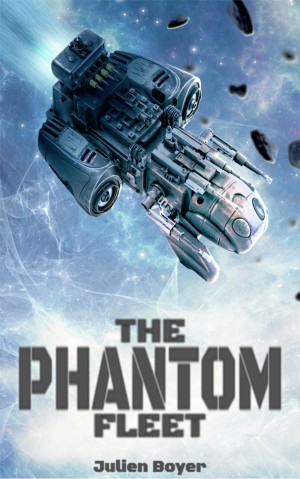
The Phantom Fleet Julien Boyer

⭐⭐⭐⭐ (I really liked it and recommend it!)

This is a cute piece of space opera, fast paced, with humour and a sly take on all kinds of tropes. The protagonist emerges as an... unexpected... person, very delightful. The trusty AI sidekick is well done, too. The end is deadpan not-so-happy-ending that made me laugh.

I was fully prepared to roll my eyes at laser beams lighting up the interstellar medium, spaceships that whiz between Mars, Earth and Moon within hours, but the author thankfully assures us these are artistic liberties. As long as there is no dodging between asteroids, I'm good.

Read it. It's fun.

Free on Smashwords.

02 January 2019

More 3 to 3.5 star science fiction stories

These are more books which I read in 2018 (even though I downloaded some the previous year; yes, my backlog is not funny). Each is rated around 3 stars, meaning I liked it well enough to write reviews and hope it gets good sales. So here are short reviews and links to find the books.

This is part 2 of what is actually the same post (starting here), but broken up so that (a) it’s not too long and (b) I can label the post without losing any of the book or author names. So it might extend to one or two more posts. Bear with me.

Point of origin | T J Kinsella
⭐⭐⭐ and a half

Why space probes should not have manufacturer's addresses. Amusing little short-short. You can read and enjoy this very quickly.

The alienness of the aliens is extremely well done; one of the best. Unfortunately, marred by minor errors like homophone spellings.


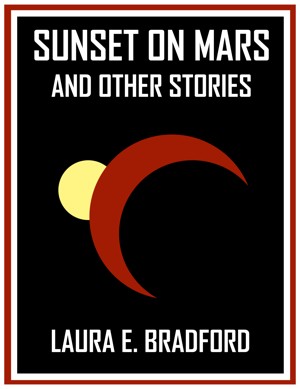
Sunset on Mars and other stories | Laura E. Bradford
⭐⭐⭐

Well written and edited. Very short. Amusing in parts. But more TV serial episodes than sci fi.

And she got the colour of a Martian sunset wrong...

Find it here: https://www.smashwords.com/books/view/61170


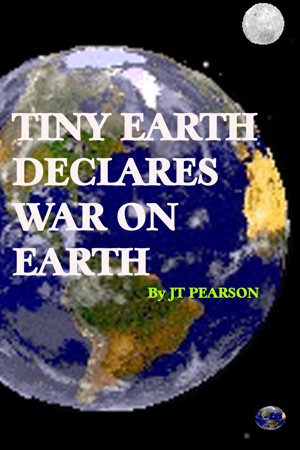
Tiny Earth Declares War On Earth | JT Pearson
⭐⭐⭐

Tiny Earth is so small, it's invisible. With high tech, the King of Tiny Earth threatens Earth, particularly the President of the USA. Mad antics ensue. It's completely silly.

This is another story in the madcap saga and at par with the rest. (I don’t know if the author loves Tom Cruise or hates him, but the poor man occurs in almost every Tiny Earth story, to hilarious if implausible ends).

Find it here: https://www.smashwords.com/books/view/291176


The Art of Deception | David Addo
⭐⭐⭐

Not really sci fi unless you call Spy Kids sci fi. A good story for young teens. A neatly written little episode, more detective fiction than science fiction. The initial scenes are mostly unnecessary, but you can bear them, because it gets better.

You can find it here: https://www.smashwords.com/books/view/645613


....Continued in the next post...


11 September 2018

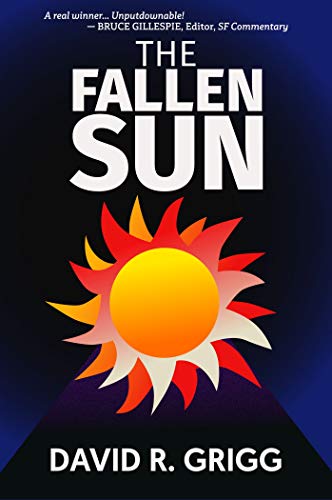
A fallen sun, a whodunit and mindbending world-building

What more could you want? I’ve read several short stories by David Grigg and his short novel A Twist of Fate. I thought he had set high standards.

The Fallen Sun has just raised those standards further. It’s going to be difficult to avoid spoilers, because I’m so keen to share the wow moments in this book’s plot, but I shall control myself.

Three young people come of age (we’d call them older teens, but in the world of Sunfall, they are about ‘7 or 8 millends old’) and are faced with having their comfortable if unexciting worlds turned upside down, in a civilisation that is thousands of years old and has totally fossilised its working and culture. Candens and Campana of the Clan of Bellringers are brought up very differently. Only boys like Candens get taught the work of the high-class Clans, and girls like Campana have to content themselves with make-work like embroidery. Because, hey, they will get married and leak the Clan secrets. (Not that Candens, as a second son, has much joy of it either, bitterly watching his elder twin become an addict and wastrel.)

Campana’s friend and Candens' pledge, Adura, will have none of it. She is not keen to be traded as a pawn in clan politics, and joins a secret group. Which has an even more secret agenda.

Things go from bad to worse for our trio, as they get accused of murderous intent, get enmeshed in kidnapping, and get thoroughly framed by the real villains.

This is not a fantasy story, as you’d think at first, fallen sun and so on, but a well plotted sci fi with a fast pace, mindbending world-building, a carefully realised culture, wicked but human villains, a plot with plenty of twists, and whatever else you could want in a sci fi adventure of the very far future. All the while, David Grigg slowly pulls the world itself into sharper and sharper focus. Like any good sci fi, the world itself is a character. (Okay, okay, I promised no spoilers). There are plenty of wow moments as you realise what is really going on. The familiar becomes strange, and the strange becomes familiar as the book goes on. The characters grow upon you, and their flaws become endearing. By the time they are fully tangled in the web of deceit, you’re rooting for them all the way, and turning pages frantically to find out: what next??

The motives and methods of the villains are difficult to imagine until they slowly become revealed and perfectly logical after all. Like any good mystery, you go ‘of course!’ once you know the answer, and yet, like any good mystery, you can guess and guess and mostly guess all wrong.

This is sci fi of very high quality. You won’t be disappointed.

Read The Fallen Sun if you like... Terry Pratchett, especially if you liked Strata better than the Discworld books; M John Harrison’s The Pastel City; Jack Vance’s Dying Earth books, but you didn’t like that much callousness; historical mysteries and alternative history sci fi of the far past; sci fi that borders on fantasy; epic fantasy which makes sense (no magic); JRR Tolkein, but you would have preferred a faster read with real humans and less Destiny; YA; or sci fi with horses. It’s difficult to say more without spoilers, but this is hard sci fi though it initially reads closer to fantasy.

Disclaimer: I was a beta reader for the book (too greedy to wait for a David Grigg book to be officially released). Let me tell you, the draft version was compelling, but the final version had me spellbound--it blew my socks off, and I grudged my eating and sleeping time.

03 February 2017

Time travel for a better world

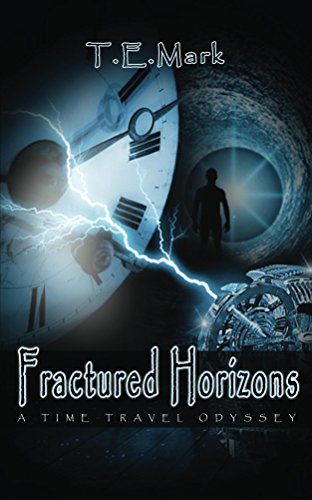
Fractured Horizons | T.E. Mark

I first came across T.E. Mark’s writing on his blog (temarkauthor.wordpress.com) where he writes these cheerful suggestions for SF writers struggling with sounding sufficiently high-tech. He not only brings the real science to you in an easily digestible format, but then proceeds to take off on the wildest trips through space and time and the multiverse, peppering the reader with crazy tech and plausible technology terms, until you finish the piece either with a big grin on your face or laughing helplessly.A time travel book for young adults

So I was more than delighted when he kindly agreed to give me a copy of Fractured Horizons for review. And I was certainly not let down in the least.

Fractured Horizons is a light read for young adults. The nearest book I can think of which is similar in theme is possibly Johnny and the Bomb by Terry Pratchett. As an older adult, I could wish FH was as long as JATB but TE Mark packs in quite a punch in a much shorter book.

Robert Davie, a teen in England, meets a new girl in school on page one. She’s mysterious, and knows more about him than he thinks possible, and leaves with a cryptic suggestion that he not freak out too much at the evening coming up; he’s not crazy. Robert, a studious type not given to thinking of himself as that attractive to girls, goes home. You know what they say about home? It’s where the wifi connects automatically. Robert finds out that the wifi not only doesn’t connect automatically, it doesn’t seem to be there. His mom is not his mom. The kitchen is not the kitchen. The world is not in 2016. He remembers Helena’s warning, and hangs onto sanity.

The next day is worse. He’s now in Alexandria, studying with Euclid, and he has a different name (and understands a different language)! Fortunately, Helena is around to explain/befuddle him more.

Robert finds he’s in ‘training’, but for what? He goes from past to future and back, depending on ‘what he learns’ during the day. Helena accompanies him throughout, nudging him towards understanding, managing the transitions and exchanging witty dialogue. The speed of the story and the light touch with the banter between the two made me spend the whole time reading FH with a smile on my face, sometimes expanding to a grin. The smile remained after the last scene flashed on the page and the final ellipsis came up.

The story is ostensibly about the adventures of Robert, but is actually more subtle. You end up wondering about which technological advances the present state of society can withstand, and which would likely overwhelm our coping power. Would you change it if you had the power? The book looks at nuclear power. A thoughtful teen would also go beyond and start wondering about climate change, about the Internet, and other technology impacts we take as ‘given’.

Do I recommend it? Well, if you want to smile your way through a neat story that allows you to think (or not, as you please), go right ahead and pick it up.

13 August 2016

The Establishment or the Rebellion?

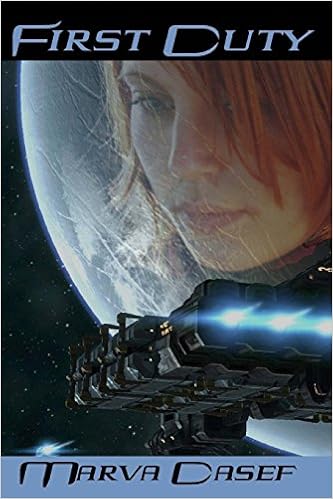
Science Fiction for Young Teens | First Duty | Marva Dasef


I know Marva Dasef as the author of the gentle, imaginative and exploratory books of the Abu Nuwas series, and so I was looking forward to First Duty, bearing in mind, of course, that this time we are talking science fiction and not fantasy. I’ve also read her other fine books, Lemons and Other Kid Tales and Fish Story, so I grabbed the chance to pick up First Duty on a hefty discount when Marva Dasef did a giveaway. I was pretty confident I’d get something suited for kids of ages 12-90. No gruesome horrors, wicked but not evil villains, simple but not simplified plots.

First Duty does not quite pull off the same standards. Don’t get me wrong: the writing is crisp and the editing flawless, which already lifts the book head and shoulders over most indie books. But it’s in the reasoning that it stumbles. When Abu Nuwas asks a young boy whether it is right for girls to be disallowed from certain activities, he lets the boy reason it out for himself. Nyra, the protagonist of First Duty doesn’t quite reason anything out. She goes from action to action much like a TV serial heroine. There are twists and turns in the plot, but none of the mind. Freedom is presented to us as an unalloyed good, losing the chance to explain to young readers what exactly is wrong when corporatisation of whole planets results in poorly-fed slave labour. The desperation of the tall and martial-arts-talented Nyra to get off-planet is there, but there is no back-story to explain why. We know there is inequality in the whole setup, but we barely brush the fringes or implications of it.

Nyra survives the initial test (ha, you guessed that, did you?) and the first chapters did bring out a bit of the heartlessness of the system in that cadets could be and did get killed in the last test, for no real reason other than ‘testing’. She then is part of a mission to deliver a rebel to prison, where she gets to know for the first time that there is a rebellion, and what the reasons for it are (freedom, equality).

At this point, I felt that Nyra is a naif. But is she? She’s supposed to be one of the smartest cadets, and she is selected, after all, to infiltrate the rebels, once she’s presented that plan as a fait accompli. So, plenty of initiative, smarts, physical capability, and perhaps charm, to be able to convince the rebel leader she is a committed rebel.

She meets a lot of rebels, and finds out more about the status of the rebellion on her own home world, something she had been blithely ignorant of. Are real teens that ignorant? It’s possible, but surely a sharp young woman like Nyra would have known something more than she does. Or is she like the many one-track minds one sees alas too often in academia, someone who scores well by single-minded focus, and therefore not a rounded personality with other interests?

She goes from adventure to adventure, with a final result you can expect from reading the back cover or my own headline for this post (spoilers? Who, me? Never!) And yet, somehow, it seems not to quite touch her at any depth. Not the unexplained sexism of her first Captain, nor the suspicion of the second. It’s all: huh, I shall prove to you that I am capable. Nyra is too perfect already, there is no scope of showing growth in the character.

Another lost opportunity is the Vargans, including one of Nyra’s few friends, Smith, who is her contact back to headquarters, someone who follows her into the rebel stronghold under the guise of a romance. Dasef has created a super-race of humans adapted to extreme environments, one of whom is the laid-back Smith. However, the special organs and abilities don’t actually have anything to do in the story. I hope the sequels will put these to better use.

All in all, a light read, with a light touch, and a light treatment. Anyway, I’m off to read the first of Marva Dasef’s Witches of Galdorheim.

19 July 2016

A 17 year old tackles visions of deadly future danger


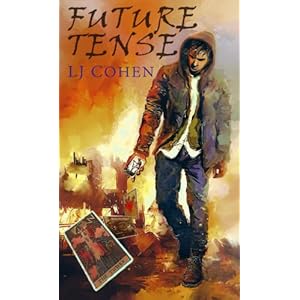
Fantasy, YA | Future Tense | LJ Cohen

Matt is 17, going on 18, and haunted by visions of the future. As a kid, he'd had a vision of a fire, and soon after, his parents had died, leaving him an orphan, in and out of foster homes. Mr and Mrs Powell, who foster other children than Matt as well, are good people, but Matt worries that his visions of death and pain would envelop anyone he cares for—and they would die horribly--and so all he looks for is to 'graduate' foster care when he hits 18. He's trying not to rock the boat.

Then he meets Amara, and Amara's great-aunt. Amara's in his school, and their first encounter is Matt inadvertently and anonymously saving her from a group of bullies. The more Amara tries to understand what Matt is about, the more he tries to push her away. Not that he can. Amara's blind great-aunt reads tarot cards, and sees the 'gift' in Matt.

Now, that's the point at which I would normally flap my hands in exasperation and abandon the book, because, I mean, tarot? One step below astrology, the way I look at it. I mean, I was looking at a fantasy book, not a superstition book.

But LJ Cohen's writing dragged me into the story. By the time this came up, I was totally involved with the characters, and I wanted to know how a happy ending could possibly be pulled out of those dark and dangerous visions. It's a fantasy book, and tarot is just a prop for parts of it. You could replace it with potions if that makes you feel happy. (LJ Cohen later told me on her Google+ profile that she uses tarot as a plot-advancing device and does not advocate it, so there. And yes, that does mean the author is accessible to fans).

Suffice to say that said happy ending occurs, after a breathless rush through a fast-paced story with characters you really care about, credible villains, heroic actions, and suitable comeuppance for the wicked. Which is not to say it's a bloodless story. People get hurt, some badly. It's all very credible and real, and you feel every emotion along the rollercoaster of the story.

Do I recommend this book for young adults of all ages?

Do I, indeed!

18 October 2014

Life after Artemis Fowl

YA SF | WARP The Reluctant Assassin | Eoin Colfer

So, last review I said I'd tell you about a coincidence. The last book had a protagonist named Rylee, and this one has a protagonist named Riley. How's that for coincidence between two YA thrillers? Oh, so the title says YA SF? Big deal. Can't an SF book be a thriller? Usually, they all are. Thrilling, I mean.

Let's get on with it. Riley is an orphan from Victorian London. Chevie aka Chevron, is a teen FBI agent (it's an experiment by the FBI, being abandoned). How do they meet, you wonder. Not so tough. The FBI has a top secret program called WARP, in which witness protection is done by hiding the witnesses in the past. Chevie, in some kind of disgrace for saving some people she was watching over (yeah, yeah, you know how it goes), is sent to London to mind the WARP machine, but not told by Agent Orange what it's all about. (Please groan along with me if you get the Agent Orange reference, since we soon enough find that's not his real name).

Just to get some things sorted out for you, Agent Orange's dad invented WARP, and is sulking in the past, along with the timekey. Which means nobody else can go to the past, and the people there are stuck.

Now, someone wants to assassinate the dad, and pays our friend, the evil villain Albert Garrick, to do so. Albert in turn wants Riley to do so. Somewhere in the process, Riley tumbles out in our century. Garrick, an erstwhile stage magician and enthusiastic assassin, realises that something is afoot and he can gain power, maybe even rule the world (muwahahahahaha!) Somewhere in the transfer when Garrick hits our century, he gets super powers as well as a lot of information about the present. (Not telling you how; that would be a spoiler).

So, you have a story with a supervillain, and ordinary teenaged heroes, each with his or her own weaknesses and strengths.

Eoin Colfer never promises a smooth ride, or even a happy ending. The process of beating the villain is complex, nail-biting, and never to be taken for granted. You may even find that the villain is not fully beaten, but only a temporary truce has been formed. Other villains pop up and help or hinder, depending on their own needs and outlooks.

If you liked the Artemis Fowl books and The Airman, the chances are good you'll like WARP. There's more historical reference and less fantasy in WARP than in Artemis Fowl, and more fantasy and less historical reference than in The Airman. Just so you know.

Recommended!

Reading YA books over the objections of the Resident Teen


Thriller | RUN | Greg Olsen

The resident teen wanted to know why I read YA books instead of 'normal adult' books. Are they better? You bet they are!

RUN features a protagonist named Rylee. I'll come to this in the next review, under the heading 'coincidences'.

Rylee has been on the run from since she can remember. Every now and then, her paranoid mother (not really, in case someone is really out to get you, are you still paranoid?) will uproot the whole family, stepfather, stepbrother and all, and they will change their names and city. Rylee has reached the grand old age of 16 or so, and wants to have a normal life and normal friends, like schoolmate Caleb.

Who's after them? Why can't normal law enforcement keep the villain at bay? Rylee doesn't know, and nobody's telling.

Till one day she reaches home to find her brother calling for her in terror. Someone has killed her stepfather, and her mother is missing. Rylee goes on the run, to save seven-year-old Hayden, and possibly her mother, too. There are clues her mother has left for her, and there are clues she finds out for herself. All the while avoiding being caught for a murder she did not do. There are so many lies she has to go through, and so many layers of lies, the book begins to look fairly onion-shaped. There are evil villains, convoluted reasons why people do the things they do, idols with feet of clay, unexpected help, serial killers, crooked cops, even facebook. What more could a young adult want?

I loved the book, and would want to read more about Rylee (whose 'real' name we do find out at some stage) and her further adventures. Here is one ninja you'd want on your side: fearless, dedicated, intelligent, compassionate and a chameleon! Every girl's hero fantasy, written in a pacy, no-nonsense first-person style that is so very believable and true to the character.

Strongly recommended!

24 August 2014

What if you woke up and found that you were dead and everyone else had disappeared?

Science fiction/YA | More than this | Patrick Ness

Patrick Ness is the author of the best-selling Chaos Walking trilogy, about which the resident teen says (in tones of stricken awe): “It totally ruined my childhood!” I have the nasty feeling that I have not reviewed all the books in that trilogy, but never mind. I'll sum up and say that it introduced true and mundane evil to readers through the adventures of two young teens on a different planet. There, men's and animals' (including alien animals) every thought is broadcast to all, while only women's thoughts are not. One man decides to eliminate women and rule the world. It's about responsibility, about integrity, about the reactions of people to repression and how easily populations can be subjugated and subdued, and where true resistance and courage come from, and about ends and means.

Before I come to this book, let me just point out a few coincidences. I've just told you about a book by Seth Patrick. Well, this book is by Patrick (Ness) about Seth (the main character). Howzzat?

As the blurb says, a boy dies. Drowns. All the way dead. And then he wakes up in his childhood home. Except that there is nobody else in the world. All the houses are empty and abandoned. There is old, stale food in cans, most puffed up and dangerous, and some water. There are hardly any animals. Plants have run riot. Abandoned cars and trains, and whole acres of burned-out city greet the weak and terrified Seth.

A typical teen nightmare (I've yet to write my own version of the story of waking up in a dead and abandoned world, so I presume all teens have this scary vision). 

Slowly, we find why Seth drowned through flashbacks of his life every time he goes to sleep.

Yet, it's increasingly confusing where exactly he is now. There is stuff in his house that he knows for sure is in his new house half a world away.

And then he is accosted by two more people. One a teen a bit older than him, and one a foreign kid. All of them are being chased by a futuristic black van with The Driver in it, who seems to be interested only in tracking them down and attacking them with something like a lightning bolt generator, but worse. Not human at all. And why do the youngsters have lights under their necks?

The secret lies, it seems, in the prison behind the house. A place the Driver seems to be protecting. And all that the kids have on their side are theories and raw courage.

Have you ever felt that your life is not what you want? And there should be More Than This?

Read it. It's good. Though the resident teen is reluctant to further ruin the end of childhood, and refuses to touch the book with any bargepole. I hereby declare 'stupid teen' a tautology.

09 December 2013

A fresh look at old tropes

Books | Matt Stephens | The Jake Colbert Testimony

This is a book that is full of old SF tropes, both from books and movies. As page one tells you, “I have told this story twice, and one of the skeptics has made the point of saying that there are several clichés in the narrative. If you think that too, then just remember, these things are apparently commonplace in these testimonials for a reason.”

So, while it's as tropey as a summer movie for teens, it's fun to read, and fresh. The book is written as a report, pulling heavily on Jake's journal written during the actual events. This helps maintain a lot of suspense, as the 'live' reports get a lot of editorial help from hindsight.

Jake Colbert, teen protagonist, is getting a new girlfriend in his life, the school president Jess Connolly, someone he adores from what he thinks is a distance. She has a possessive boyfriend already, Pierce Tanner, son of the sheriff, making this opening situation a typical teen life problem. There is also the black best friend, a self-proclaimed coward, who wrily remarks in the opening chapter, when told to investigate noises in the cornfield: "I've seen this movie a thousand times." Zack said with certainty. "It starts with a kid looking through a telescope, then a bunch of high school kids start talking about scary monsters in the cornfield, and then the black dude wanders off and gets eaten by something." Zack's girlfriend, Marie, used to be Jake's girlfriend, and is very worried for his love-life. As you can see, author Matthew Stephens dives right into it, and you have the eerie noises in an overgrown cornfield right there in chapter one.

Aliens appear not too far into the story. The adults seem to be either oblivious, controlled, or complicit. In many ways, it's a typical teen movie plot: the only ones who know the truth are teens, and the truth is so full of tropes, that it is dismissed. Stephens carries this off quite well. At the same time, these are teens, after all, so worries about school, the upcoming festival, the issues with the new girlfriend, the relationship of Pierce with his father, the worry Jake has for his kid brother, all these combine to reinforce the dissonance of the aliens juxtaposed against normality (ok, normality for American teens). As the 'normal' bits play out, the aliens get bolder, and the teens are left fighting with fewer and fewer resources.

The best parts about the book are the growth of the characters, and the slow exposure of their true natures, full of heroism and cowardice, betrayal and redemption. Like any teen book, the adults are NPCs (non-playing characters) in the main, more like extras who populate the scene, essential for economic stability, but usually not fundamental to the teens' decisions. This is as a teen story should be. If I was a teen, I wouldn't have it any other way. Even as someone with teenaged kids, it's still as I want the story to be.

The pace keeps picking up, as fast as the reader can keep up. There are climactic scenes of battling the aliens, full of sound, explosions, zombiefied crowds milling around and creating further obstacles for our heroes.

And the end is surprising and satisfying and not at all tropey.

Go ahead. Read and enjoy!

Full disclosure: I got an advance copy (before all the typos were all fixed) in return for an honest review. So here you have it.


09 September 2012

Oh my gods!

Fantasy | Rick Riordan | The Lost Hero; The Son of Neptune

You know all about Percy Jackson, the demi-god son of a woman in New York and the Greek god Poseidon. Oh, you don't? Summary, then.

Rick Riordan wrote a whole set of six best-selling books about Percy Jackson, the dyslexic teen with ADHD who finds out one day that he's a demi-god and his best friend is a satyr who's been sent out into the world to protect him from monsters. These monsters have plagued Percy's life since his early teens, and made him shift from school to school as their depredations destroy buildings and worse. Now, Percy finds he has super-powers, and a Quest. Or six. He makes friends with other demi-gods in Camp Half-Blood where they grow up in relative safety, looked after by centaurs and a grumpy god, Mr D, the god of wine, who takes a dislike to our hero and insists on mangling his name at every opportunity. After saving assorted gods, their property, their kids, and even Olympus itself (which is these days parked over the Empire State Building, the Greek gods having moved to the USA without having to undergo immigration checks), Percy looks forward to the possibility of a relatively normal life with Annabeth, the daughter of [spoiler delete].

Anyway, this is a new series, and we are now introduced to Jason, the son of Jupiter, in a crackerjack scene with monsters and screaming kids at the Skywalk on the Grand Canyon. So, see, this is a series about demi-gods who are the kids of Roman gods. Except that all the demi-gods in Camp Half-Blood seem to think the Roman gods are just aspects of their own parents, and Jason becomes a bit of a misfit there. Particularly since he's lost his memory. And the memories that his new best friends have of him turn out to be fakes, to boot. He ends up with a Quest, too. Jason's quest is to free Juno from the clutches of a more ancient Power, who is waking, and must not wake. Oh, and the title comes from the fact that one of the great heroes of the camp is missing, a popular guy called Percy Jackson...

As in the previous books, the pace is relentless, the dialogues are teen American (as crackly good as the dialogues by James Patterson, dude), the super powers are awesome, and the number of secrets kept between the three main characters is bewildering. You can never predict what new monster, creature, creation, or thing is going to help or hinder them.

Riordan's imagination runs through new monsters and concepts like no other author I've come across except perhaps Larry Niven or Douglas Adams. Sure, many authors come up with cool stuff, and JK Rowling is no slouch either, in inventing crazy stuff that teens of all ages lap up eagerly. But the only ones to come up with so many new and crazy things in each book are Niven (the Emperor of new stuff), and Riordan.

Jason completes his quest--oh, you guessed that, did you?--and we get a teeny hint of where Percy might be.

But why hide the facts? You can read the salient points off the back cover of The Son of Neptune yourself. Percy, too, has lost his memory, and we find  him in the beginning of the second book at a camp for demi-gods, except, you guessed it, this camp is for the kids of Roman gods. The Romans picked up many gods from the Greeks, but their versions were usually different, sometimes just a bit, sometimes widely. Percy makes friends at the camp, and gets picked up by a couple of hitherto-loser kids to join them in--you're such a good guesser!--a Quest. The same dread Power that did the villainy in the previous book is still around. The magic stays right there till the very end.

This is another series that is going to be a best-selling series, because not only the resident teen, but the parent of the teen are going to be gulping these down by the volume.

Read, read. You will enjoy them. There's steam-punk stuff in The Lost Hero, too, in case you need more motivation.

29 May 2012

Theseus on reality television

Young Adult | Fantasy | Suzanne Collins


The Hunger Games is a fast-paced blend of the ancient story of Theseus and the minotaur and dysfunctional reality television.


Katniss and a friend are 'reaped' by the Capitol of the future dystopia of Panem as part of a vicious annual reminder that the Capitol controls the destinies of everyone in the twelve Districts that remain after the rebellious thirteenth District has been destroyed. They are part of a set of 24 teens who are forced to fight to the death for the entertainment of the people of the Capitol. Shades of the story of Theseus here; the Cretans, too, demanded annual tributes in children from the Greeks. But this one combines the worst of reality television as well, in the contrived arena, and the forced fights. The stylists and sponsors are definitely from a more modern sensibility.


This is a very fast-paced book, and is responsible for lost sleep; I realised when my eyes drooped that it was almost one in the night, and had to slam the book shut and peel it from my hands to get any sleep at all.

Enough already. I am off to go find the next book in the series, in the hope that the thoroughly and unthinkingly evil Capitol gets its just desserts.

A note from the resident teenager: the book had 'a creepy premise' and the movie only has the name in common with the book. Fortunately for me, I haven't seen the movie. :)

[If you are interested in a modern retelling of the Theseus legend, you could do worse than take a look at Mary Renault's books, of which I've read the second, The Bull from the Sea and not the first, The King must Die. I liked the book despite its grim ending, and one of these days will get around to the first book, too.]

11 May 2012

The Paving on the Way to Hell

Fantasy/sci fi/YA | Patrick Ness
Warning: minor spoilers

Last month, I finally read the second and third books in the Chaos Walking trilogy, The Ask and The Answer and Monsters of Men. Considering that these books are not available in India, and I had to get someone to handcarry them for me from the USA, you can be sure the first book, The Knife of Never Letting Go, must have had something going for it. The first book introduces us to Todd, the last boy in Prentisstown, a town on another planet, with very American settlers. But you are on another planet, you realise. Everyone can hear everyone else's thoughts here, and there are no women. The Mayor wants something from Todd. His parents (both men) want him to escape. Todd runs. Meets Viola, the sole survivor of the crash-landing of a scout spacecraft from the second wave of settlers. But the Mayor is after him. Todd and Viola run for Haven. The Mayor follows, with death in his wake. At the end of the book one, we are faced with the truth of Haven.

Book two, The Ask and The Answer, has Haven resisting the Mayor. But the Mayor has mind-control. And the only cure for the incessant leakage of men's thoughts. Yet Todd wins. Or does he? This book humanises Davy, a great achievement.

Book three, Monsters of Men, refers to 'war makes monsters of men'. What does the Mayor want? War. And he gets it. War with the aliens who live on the planet. (Aha, shades of American settlers again). And what does everyone else want? Peace. So what do we get? War. Is this book as grimly relentless as book one? Hmm, given that book two held out more hope than book one, you can safely guess: no.

A great series. Good for all young and not-so-young adults to read and enjoy. And, despite having one of the most villainous villains ever, as well as a social construct that is all too evilly possible, this book is less grim than the series by Peter V Brett.

Enjoy!

Ah, grue where least expected.

Fantasy | Peter V Brett
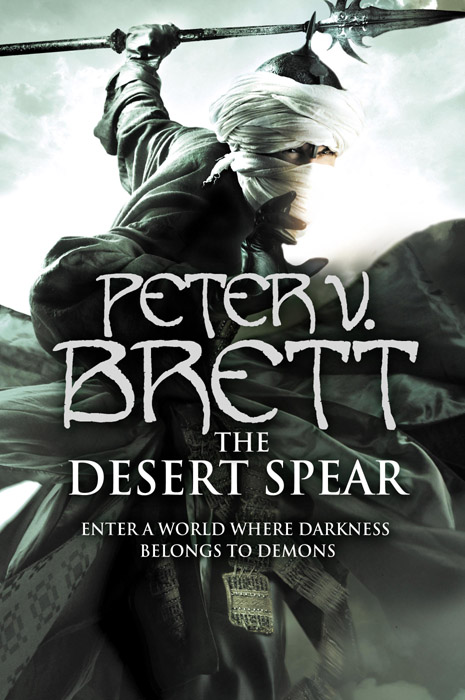
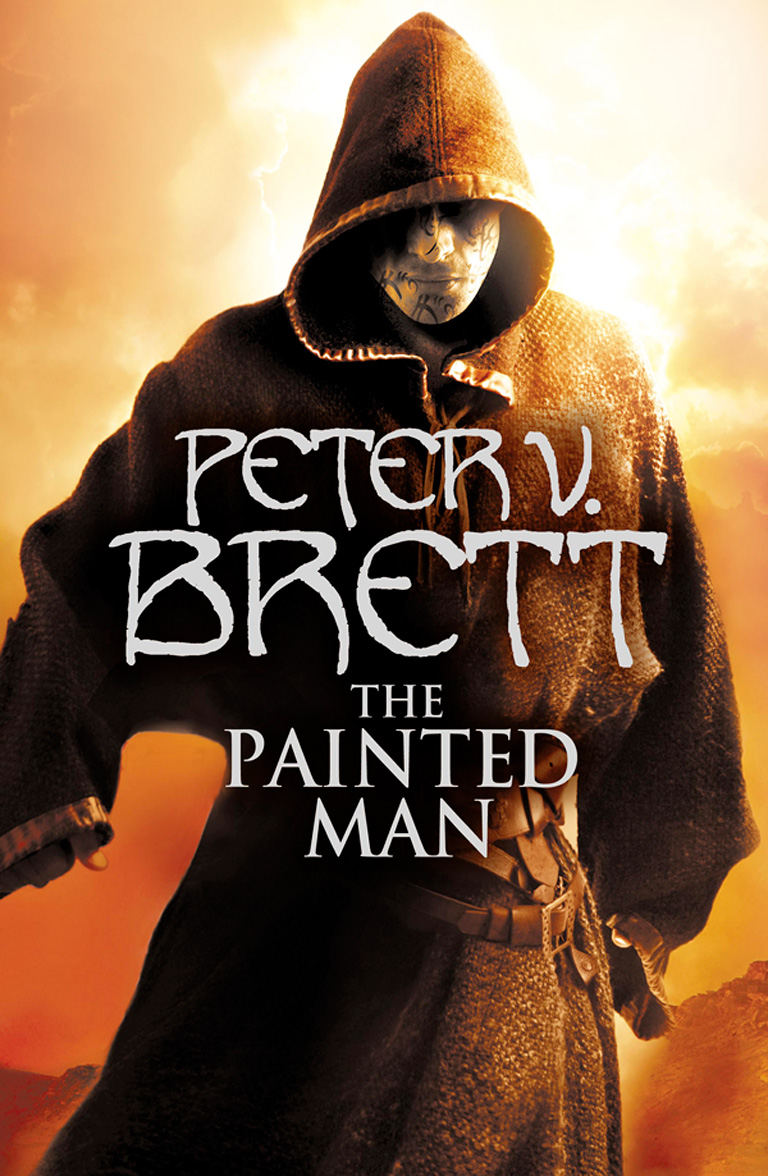
The Desert Spear by Peter V Brett is the second in a trilogy, starting with The Painted Man and due to finish with The Daylight War.


The Painted Man was marked as an award-winning Young Adult fiction, and the teen who read it before me said it was great. I found it hardly 'young' adult, what with the first few chapters starting out with incest and child abuse, and later chapters moving to betrayal after other gruesome stuff like gang rape. Just because the protagonist is a teen to start with, is no reason.... Eww.

On the plus side, the story features one of the more logical approaches to fantastic future worlds that I've come across. You start with the usual makes-no-sense fantasy setting. Sunset brings demons coalescing out of mists that rise from the grounds. Anyone outside warded buildings or warded circles (and you must draw them very precisely) gets chomped by the demons. Demons left above ground after sunrise get killed by the light. 'Something' happened to let these things out from the Earth's Core in the future. Everyone promptly regresses to bucolic feudalism. (Bah!) A few hardy people, mainly Herb Gatherers, still attempt to scientifically study the demons and try to work preventions and cures; a rare saving grace in the genre.

Arlen Bales is the main character in the first part of the book, and Leesha Paper is there for the second part, supported by Rojer. Arlen, losing his mother to the demons, dedicates his life to finding better wards, going across the desert for this, and finding ancient lore and weapons in a lost city. But the Krasians ... ok, no spoilers. Leesha is a Herb Gatherer. Rojer can charm corelings with his music.

The book ends on an ominous note, with the desert dwelling Krasians (robes, spears, bloodthirsty, no status for women, uhhh...) getting ready to invade the North. Right.

The Desert Spear starts with Jardir, the leader of the Krasians. You find out all about how he got where he did, and why he has the Krasians invading the North. Not such a villain as you assumed in book one. Just from a weird culture. (Huh!) There is murder, war, rapine, and fairly explicit sex scenes for a Young Adult book, so I assume that's the reason this one is not listed as YA.

Leesha and Rojer reappear midway, and attempt to tackle the Krasian menace via a diplomatic mission of sorts, while Arlen is off doing his thing, retracing his steps homewards.

However, now we find there are corelings which are not mindless, but are, in fact, mind demons. Who are tracking the two contenders for the role of Deliverer, A-- ... ok, no spoilers. :)

The book ends with an excerpt from The Daylight War, in which you get glimpses of the life of the new villain of book two. Maybe not a villain, either? OK, the real enemy is the demons.

Or maybe not! Arr, my head is spinning. Peter Brett writes compellingly, and the characters are not two-dimensional. Stereotypical as they seem on starting out, there are unexpected flashes of complexity and they attracted my sympathy despite my attempt to see this fantasy as purely formulaic.

I guess I'll be looking forward to book three with the same kind of horrified fascination as the teen, who said of this one, with a shudder, "It was gruesome in places." And teens, as anyone who has crossed the twenties knows, are the most hardened and brave readers in the world.

I guess I will go looking for a paperback version of Paolini's The Inheritance instead. It is bound to be mild and soothing.